

Unified national delegation delivers breakthrough results as Middle East emerges as crucial diversification market
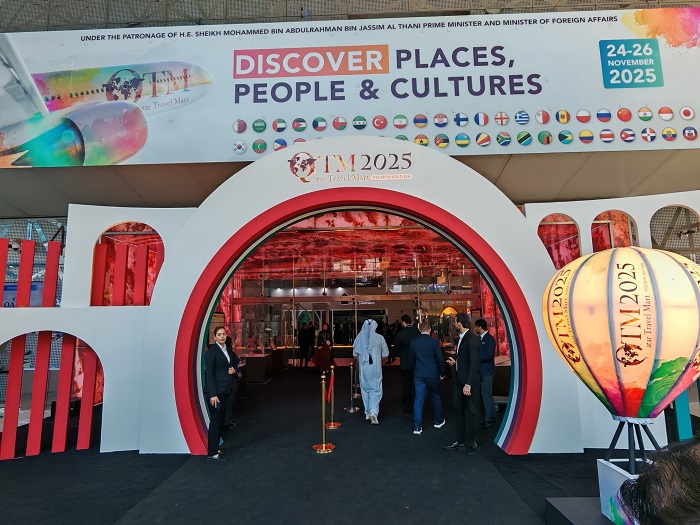
The Maldives executed one of its most coordinated international marketing campaigns at Qatar Travel Mart (QTM) last month, signaling a major strategic shift toward the high-value Gulf market. The November 24-26 showcase at Doha Exhibition and Convention Center wasn’t just another travel fair appearance – it represented a blueprint for how the destination intends to capture its share of the Middle East’s booming outbound travel market.
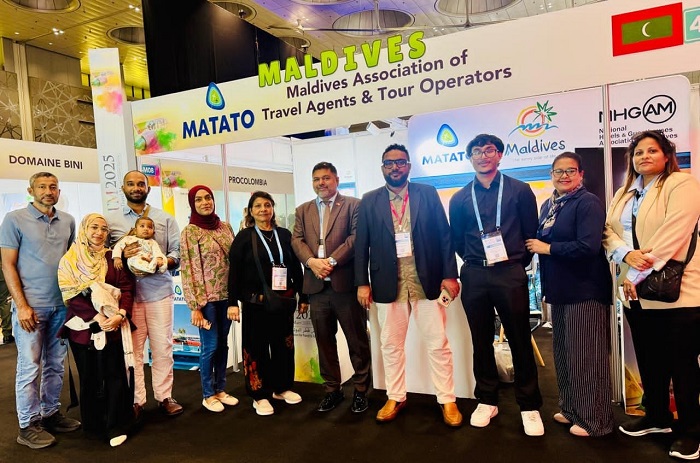
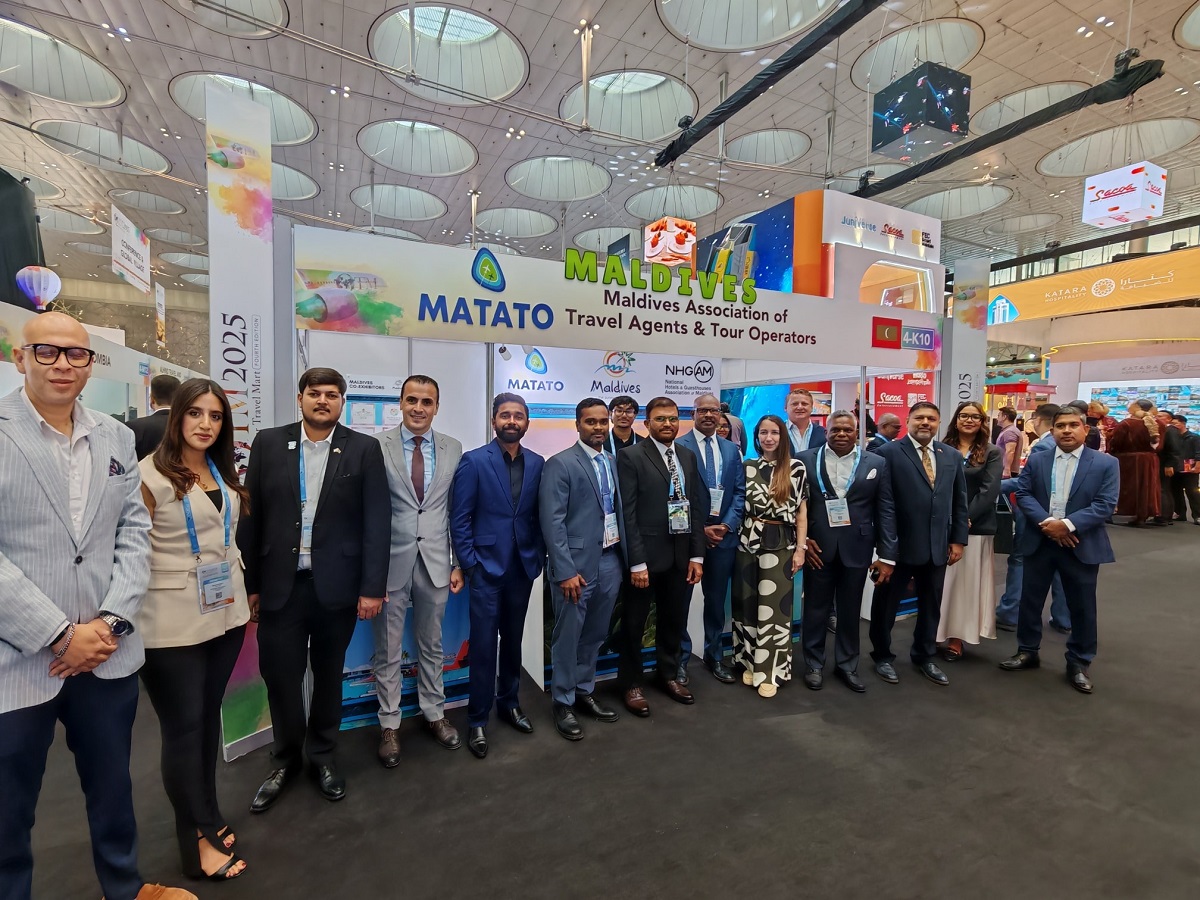
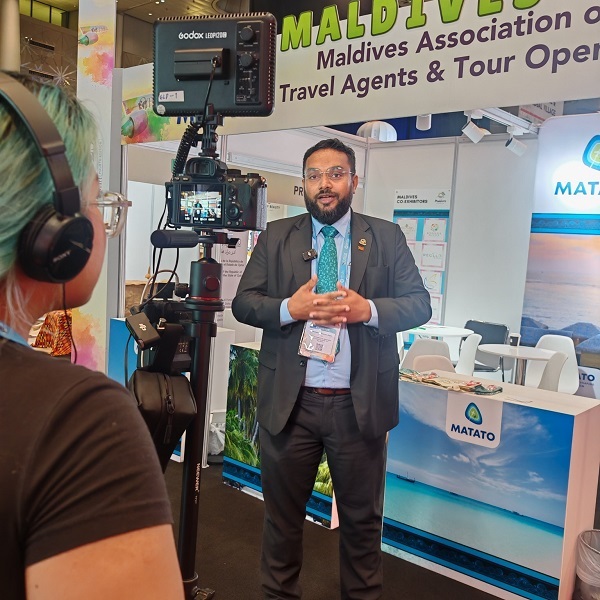
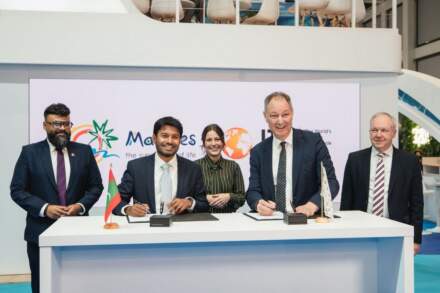
Leading the charge was the Maldives Association of Travel Agents and Tour Operators (MATATO), which orchestrated a unified national stand in partnership with Visit Maldives Corporation (VMC) and the National Hotels and Guest House Association of Maldives (NHGAM). This tripartite approach brought together destination marketing, private sector capabilities, and community-based tourism under one roof, creating what participants described as the most impactful Maldives presence at a regional travel mart.
Why the GCC Market Matters Now
The numbers tell a compelling story. Qatar’s outbound market alone generates 1.9 million trips annually, representing approximately USD 13.5 billion in travel spend – making it one of the world’s most valuable per-capita outbound markets. The broader GCC outbound travel market reached USD 76.4 billion in 2024, with projections exceeding USD 81 billion in 2025 and sustained growth of 7.6% annually through 2037.
More significantly, the Middle East is outpacing global tourism recovery. International arrivals to the region stood 29% above 2019 levels in the first nine months of 2024 – a rebound stronger than any other world region. For the Maldives, seeking to diversify beyond traditional European and Asian source markets, this represents both opportunity and imperative.
The destination welcomed approximately 2.05 million tourists in 2024, with the Middle East contributing over 80,000 visitors – about 4.3% of total arrivals. While still modest compared to established markets like China, Russia, and the UK, Middle Eastern arrivals are accelerating rapidly. Qatar specifically showed 64% year-on-year growth in August 2025, with monthly arrivals exceeding 1,200 visitors.
For a destination where tourism contributes over 60% of GDP and generated USD 5.6 billion in 2024, diversifying into high-spending Middle Eastern markets isn’t just strategy – it’s economic resilience.
A Destination United: The QTM Approach
What set the Maldives’ QTM participation apart was organizational coherence. Rather than fragmented individual booths, the destination presented a unified platform where policy, commerce, and community tourism aligned visibly.
Visit Maldives Corporation anchored the stand with national branding and long-term market strategy, providing the credibility that comes with official destination marketing authority. MATATO coordinated the business side – curating B2B meetings, managing exhibitor participation, and ensuring quality buyer engagement throughout the three-day event. NHGAM brought guesthouses and local island tourism into the conversation, demonstrating that the Maldives offers more than ultra-luxury resorts.
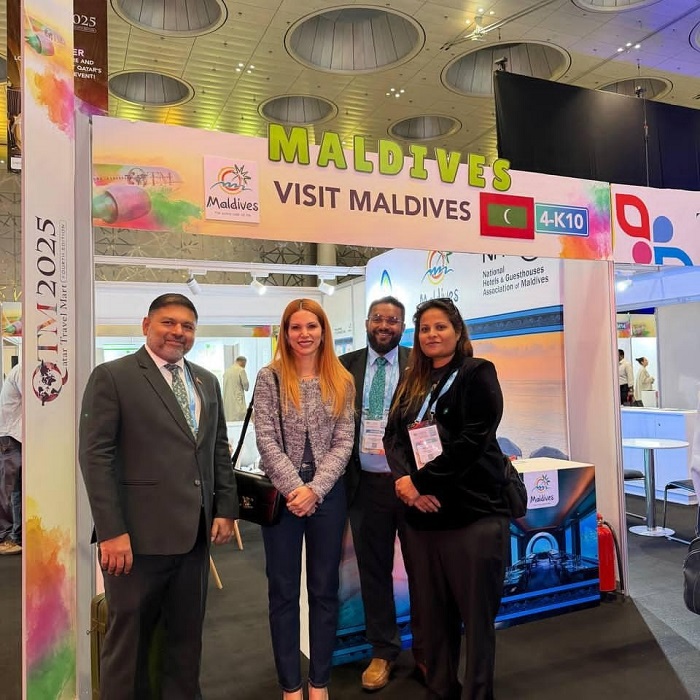
This structure reflected the Fifth Tourism Master Plan 2023-2027 in action: diversifying markets, strengthening yield, and spreading economic benefits to inhabited islands and local communities. It also sent a clear message to GCC buyers: the Maldives takes this market seriously enough to present a coordinated national front.
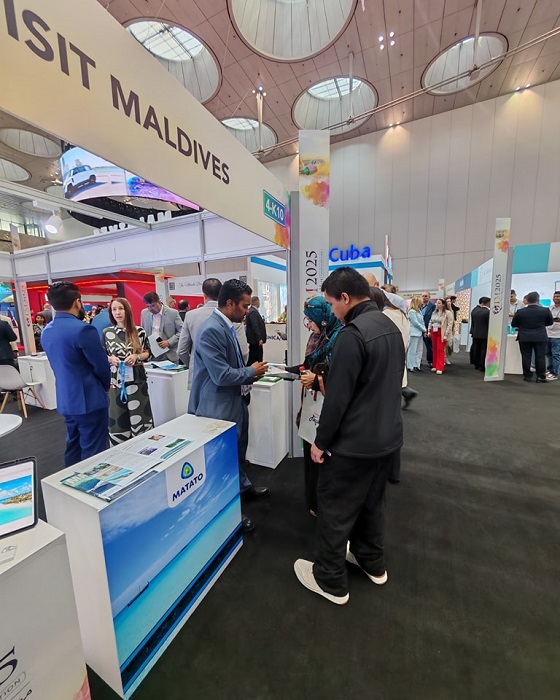
Over ten co-exhibitors participated, representing the full spectrum of Maldivian tourism. Leading DMCs like Resort Life Travel, Neoscapes Maldives, and Pearl Travel Service conducted pre-scheduled meetings with Qatar and GCC agencies. Ultra-luxury operators showcased private jet, villa, and yacht experiences tailored to high-net-worth travelers. Properties like Avani+ Fares Maldives Resort engaged with GCC family travel planners. Critically, guesthouses were present alongside five-star resorts, offering authentic local island experiences that appeal to younger, experience-driven travelers.
What QTM Delivered: Beyond Brochures
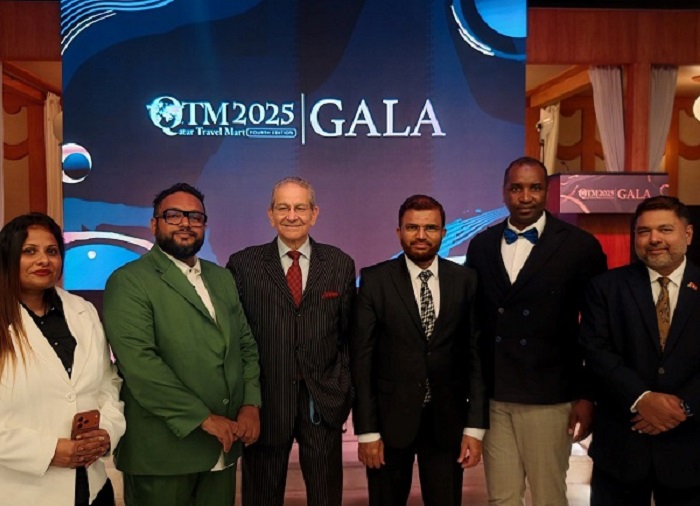
The Maldives delegation didn’t just distribute promotional materials – they closed deals and established partnerships that will drive arrivals in 2026 and beyond.
Penetration into high-value segments: Top-tier buyers, corporate planners, luxury agencies, and MICE organizers filled the meeting schedules. Exhibitors secured bookings for longer-stay, higher-spend itineraries, successfully positioned family-friendly villas and wellness retreats, and promoted halal-friendly products tailored to Middle Eastern preferences. Several participants reported closing contracts on-site and scheduling charter program negotiations.
Guesthouse breakthrough: With NHGAM’s participation, local island tourism gained unexpected traction. Mid-market agencies showed strong interest in authentic experiences rather than exclusively luxury stays. Several guesthouse operators reported their first-ever bookings from GCC markets—a significant milestone for community-based tourism. This appealed particularly to budget-conscious GCC travelers and Qatar’s large expatriate community seeking value-driven experiences.
Connectivity progress: Qatar’s aviation hub status made QTM an effective venue for airline discussions. Maldivian participants met with carrier representatives to negotiate additional capacity, joint marketing, and promotional fares. Multi-city itineraries combining Qatar stopovers with Maldives stays generated particular interest, potentially boosting arrivals for both destinations in 2026.
Market intelligence: Face-to-face engagement provided invaluable insights into GCC preferences. Exhibitors learned about demand for Arabic-language materials, halal-certified dining, family-oriented activities, and year-round positioning beyond honeymoon marketing. Several operators admitted underestimating GCC potential and committed to developing market-specific offerings.
Strategic Alignment with National Tourism Policy
The QTM participation directly advanced key pillars of the Fifth Tourism Master Plan. Market diversification received concrete momentum through established business relationships in a rapidly growing region. Inclusive growth materialized as guesthouses gained access to international buyers previously focused solely on resorts. Sustainability considerations emerged through discussions about longer stays and lower-impact local island tourism.
The unified coordination between MATATO, VMC, and NHGAM demonstrated institutional maturity. Exhibitors praised the seamless collaboration and cohesive messaging, noting that presenting a unified national stand rather than fragmented individual booths maximized credibility and impact. It signaled that the Maldives approaches the GCC market not opportunistically but strategically.
The Bigger Picture: Diversification as Resilience
The Maldives’ concentrated focus on QTM reflects broader economic logic. Traditional European markets remain vital, but over-reliance on any single region creates vulnerability to economic shocks, geopolitical disruptions, or aviation challenges. The GCC market offers multiple advantages: geographic proximity, year-round demand unaffected by European seasons, high per-trip spending, growing aviation connectivity, and increasing sophistication in travel preferences.
Middle Eastern travelers also align well with Maldivian product strengths. Family travel represents a major segment – the Maldives’ villa-based resorts suit multi-generational groups better than traditional hotel rooms. Wellness and privacy appeal to affluent GCC travelers. Cultural considerations around halal dining and alcohol-free options are easily accommodated. Stopover potential through Doha creates multi-destination value.
As one DMC representative noted, “We’ve always known the GCC was important, but QTM showed us it’s not just important – it’s ready. The buyers are qualified, the budgets are real, and the interest in the Maldives is strong. We just needed to show up properly.”
Looking Ahead: From Momentum to Market Share
Early post-event indicators suggest the investment delivered returns. Follow-up meetings continue, confirmed bookings are flowing into properties for 2026, and several exhibitors have begun developing GCC-specific marketing materials and product packages.
MATATO has announced plans to expand the Maldives presence at QTM 2026, building on this year’s foundation. The message is clear: the destination views the Middle East not as an emerging market but as a core strategic priority deserving sustained investment and professional engagement.
For a destination built on quality over quantity, targeting high-spending GCC travelers makes economic sense. For a nation seeking resilience against single-market dependence, cultivating the fast-growing Middle East provides insurance. For local communities hoping to benefit from tourism, introducing guesthouses to new markets creates opportunity.
The Maldives didn’t just attend Qatar Travel Mart 2025 – it made a statement about where the destination is heading and which markets will shape its next chapter. Based on the response from buyers, exhibitors, and partners, the market is listening.





Leave a Comment